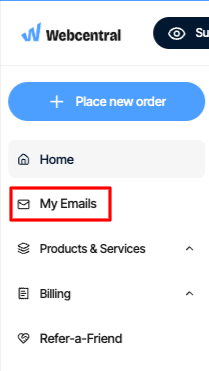
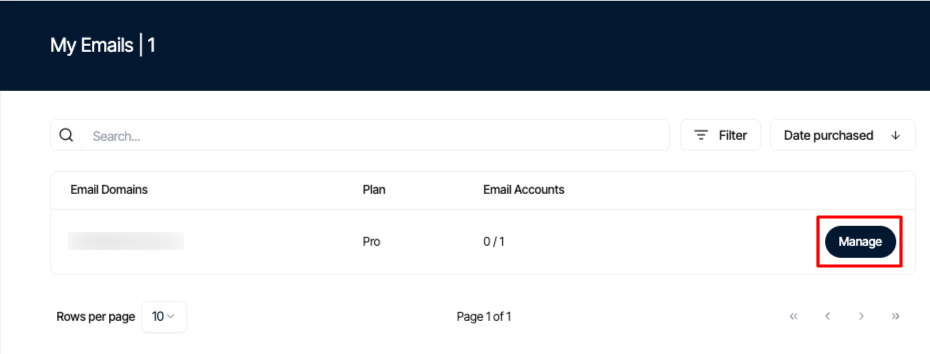
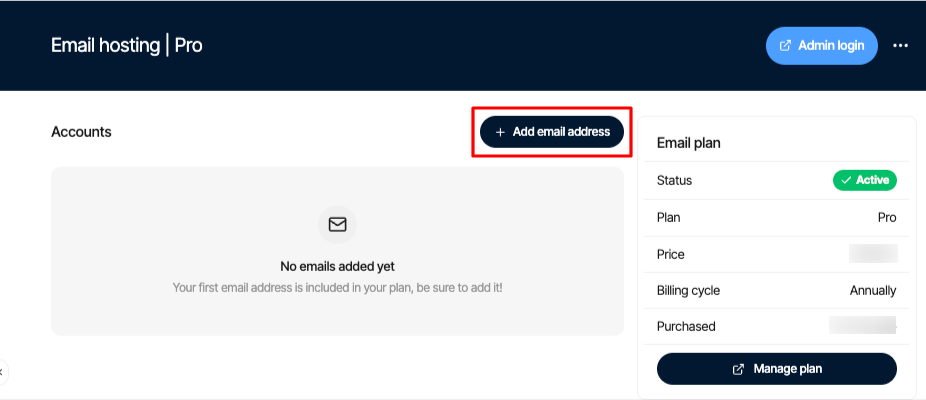
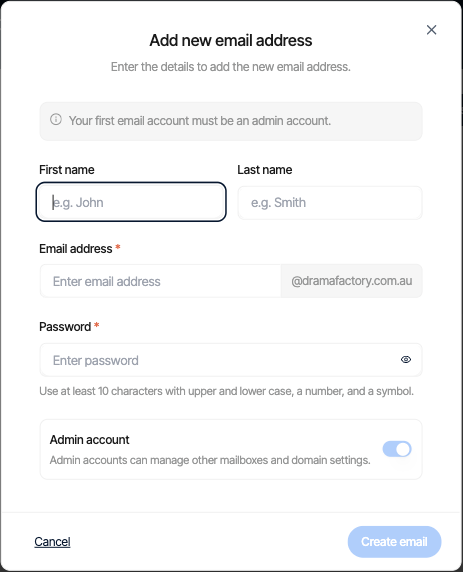
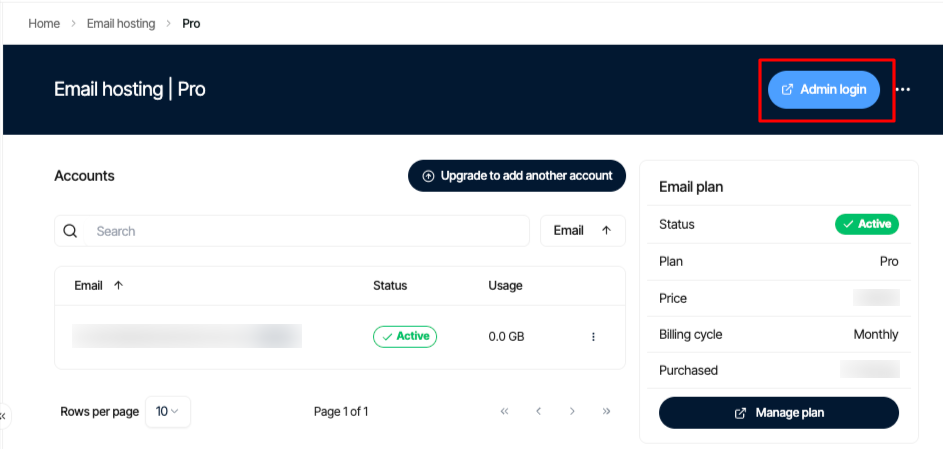
Learn how to manage your Titan Mail accounts using the Webcentral Customer Panel. This article describes how to create and manage email accounts, set up a catch-all address, forwarders, and more.
This article describes how to manage your Titan Mail accounts using the Hosting Panel. From the Hosting Panel, you can do the following:
Create and manage email accounts.
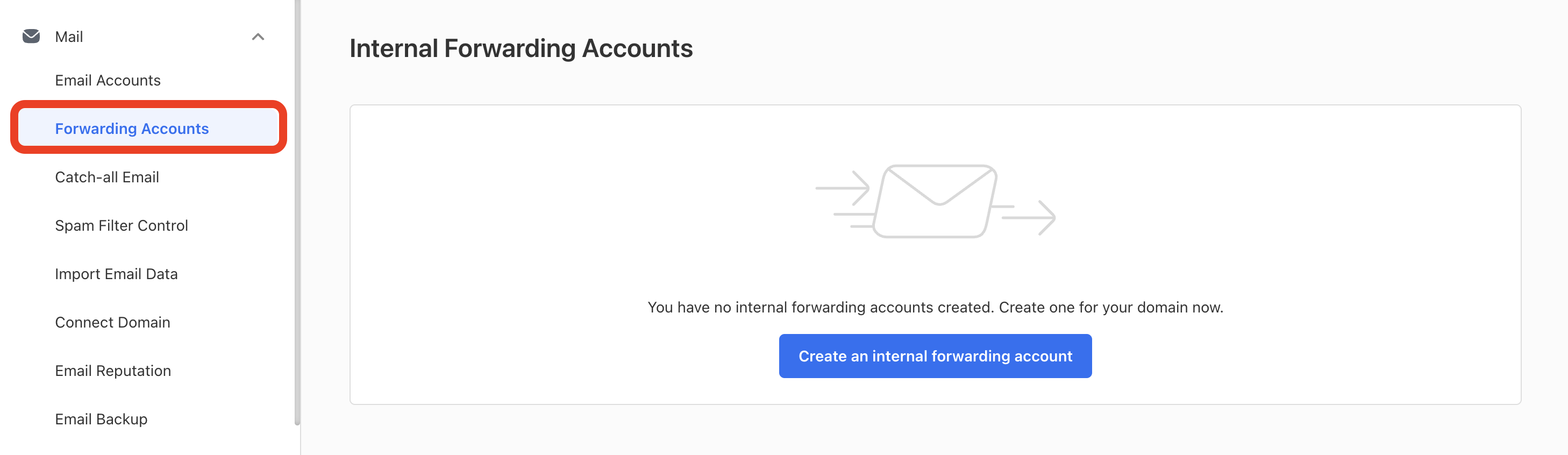
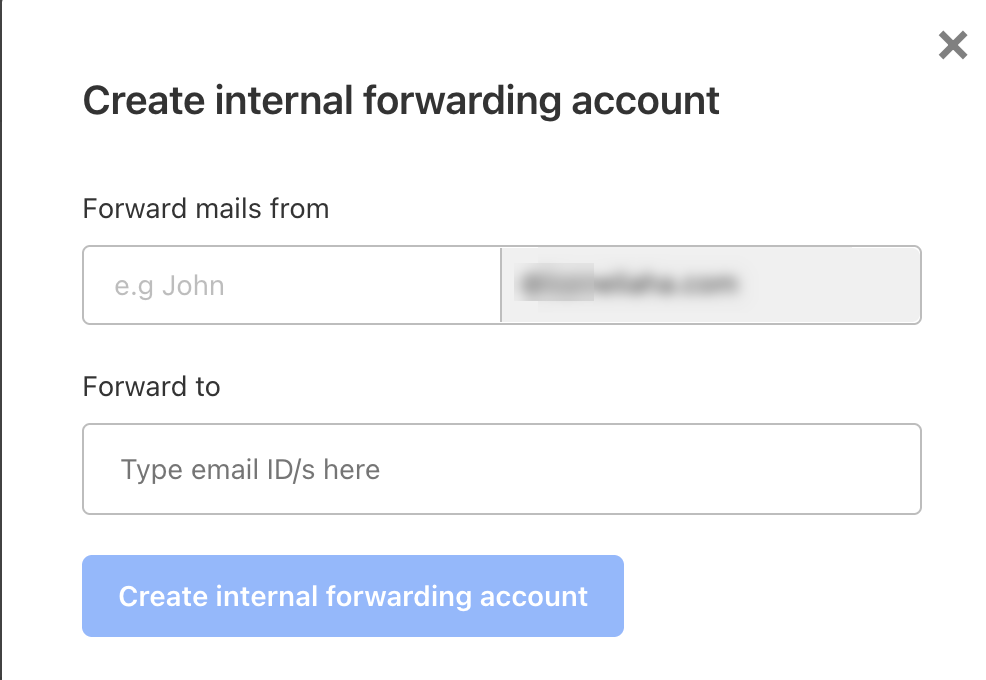
Set up forwarders.
Set up a catch-all address.
Import email data from another server.
Check the DNS status of your domain.
Get the mobile app for Android and iOS devices.
Set up DKIM (DomainKeys Identified Mail) for your domain.
Get configuration information for third-party email client applications.
To manage an existing email account, follow these steps:
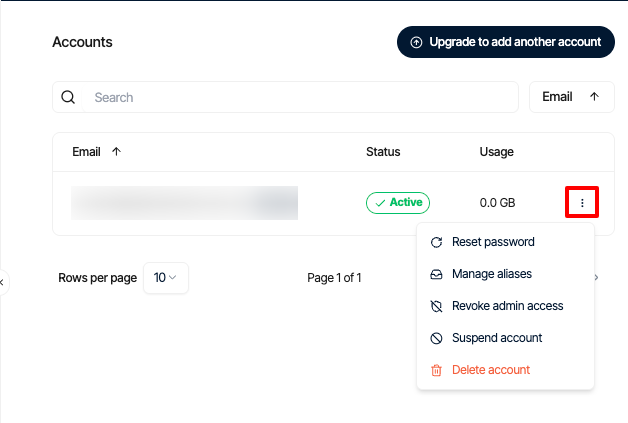
Locate the account you want to manage, and then click the three-dot icon:
Several options appear:
Reset Password: Select this option to reset the password for the account.
Manage Alias: Select this option to add an alias. Aliases enable you to use multiple e-mail addresses with one account. For example, if the primary email account is info@example.com, you could add an alias information@example.com, and the info@example.com account would receive any messages sent to information@example.com.
Suspend Account: Select this option to suspend the account.
To unsuspend an account, in the account list, in the Status column, hover over Suspended, and then click Unsuspend.
Delete Account: Select this option to delete the account.
You can set up a catch-all address for your domain. A catch-all address “catches” e-mail messages that are sent to non-existent or invalid e-mail addresses on your domain. For example, normally if a customer sends a message to sals@example.com instead of sales@example.com, the message is rejected (assuming, of course, that a sals@example.com address does not actually exist). With a catch-all address however, this message is delivered to the e-mail account that is designated as the catch-all address.
When you enable a catch-all address, you can receive a large volume of unwanted e-mail messages, including spam. Additionally, these messages take up disk space, so you should regularly monitor a catch-all address to ensure it is not filling your storage quota.
To configure a catch-all address for your domain, follow these steps:
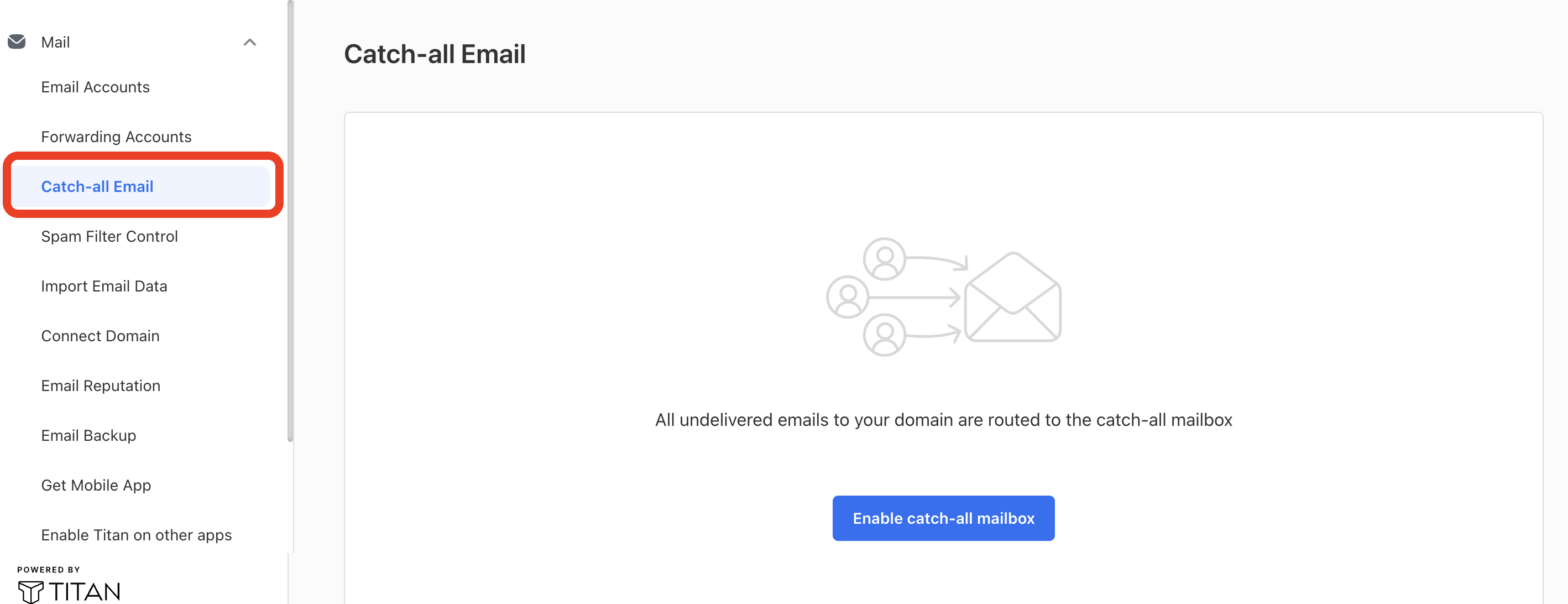
Click the Catch-all Email icon:
Click Enable catch-all mailbox.
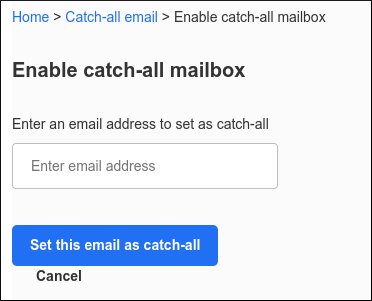
In the Enter email address text box, type the email address where you want to receive the catch-all messages:
Click Set this email as catch-all. The catch-all address is now active.
This section enables you to set up your domain for email, and check the current status of your domain’s MX and TXT DNS records.For detailed information about how to set up DNS records for your domain’s email, please see Setting up your domain’s DNS records for Titan Mail.
Getting configuration information for third-party email client applications
To view configuration information for third-party email client applications, such as IMAP and SMTP server settings, click the Configure desktop app icon.